











For Many Homes, Usually No — But Not Always
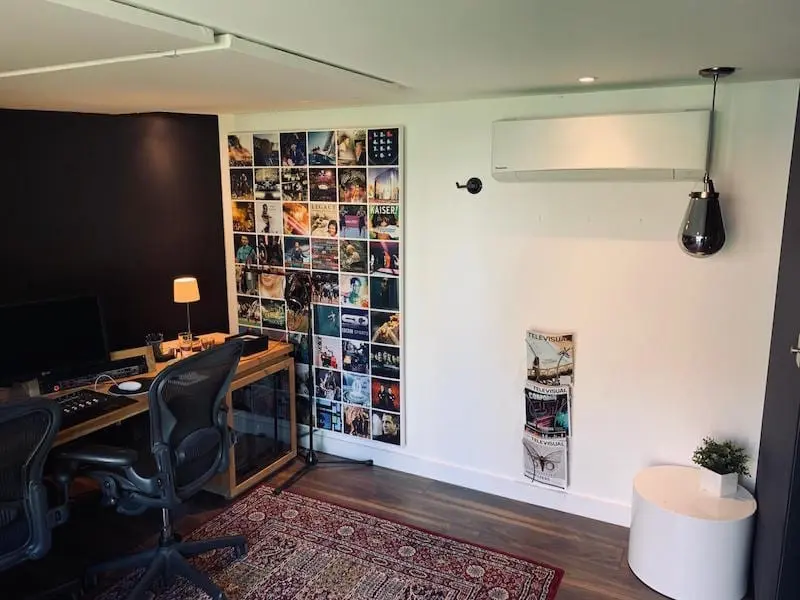
Planning Portal’s interactive guidance says adding air conditioning to your home is considered permitted development provided all the limits and conditions are met. The detailed domestic rules apply to a house or a block of flats, including within the curtilage of that building, provided a block of flats consists wholly of flats and does not also contain commercial premises.
The position becomes more complicated if the property is listed, in a protected area, subject to an Article 4 Direction or another restriction, or if the installation is on non-domestic land. Planning Portal’s non-domestic guidance says installations of air source heat pumps on non-domestic land are likely to require an application for planning permission.
WHEN AIR CONDITIONING CAN FALL UNDER PERMITTED DEVELOPMENT
When You May Not Need Planning Permission
For domestic premises in England, many fixed air conditioning systems can fall within permitted development if they satisfy the current heat pump rules. In practical terms, that usually means the outdoor unit size, number of units, roof position and overall siting all need to stay within the limits, and the system must comply with the relevant MCS planning standard. Planning Portal also says the unit must not be used solely for cooling purposes, while the 29 May 2025 changes expressly allow air-to-air models that provide cooling as well as heating.
The main current limits and conditions include:
- The outdoor compressor unit must not exceed 1.5 cubic metres on a house or 0.6 cubic metres for a block of flats.
- On a detached house, the first two air source heat pumps can be permitted development.
- On a non-detached house or a block of flats, only the first installation is permitted development.
- The installation must comply with MCS 020 or an equivalent standard.
- The unit must not be installed on a pitched roof.
- If it is installed on a flat roof, all parts of it must be at least 1 metre from the external edge of that roof.
- The unit must be sited, so far as practicable, to minimise its effect on the appearance of the building and the amenity of the area.
BOUNDARY LIMITS, NOISE AND UNIT POSITION
What the Boundary Rule Is Now
There is no longer a general national rule in England requiring a domestic outdoor unit to be at least 1 metre from the property boundary. The government confirmed that the 1 metre boundary rule was removed when the updated permitted development rules came into force on 29 May 2025.
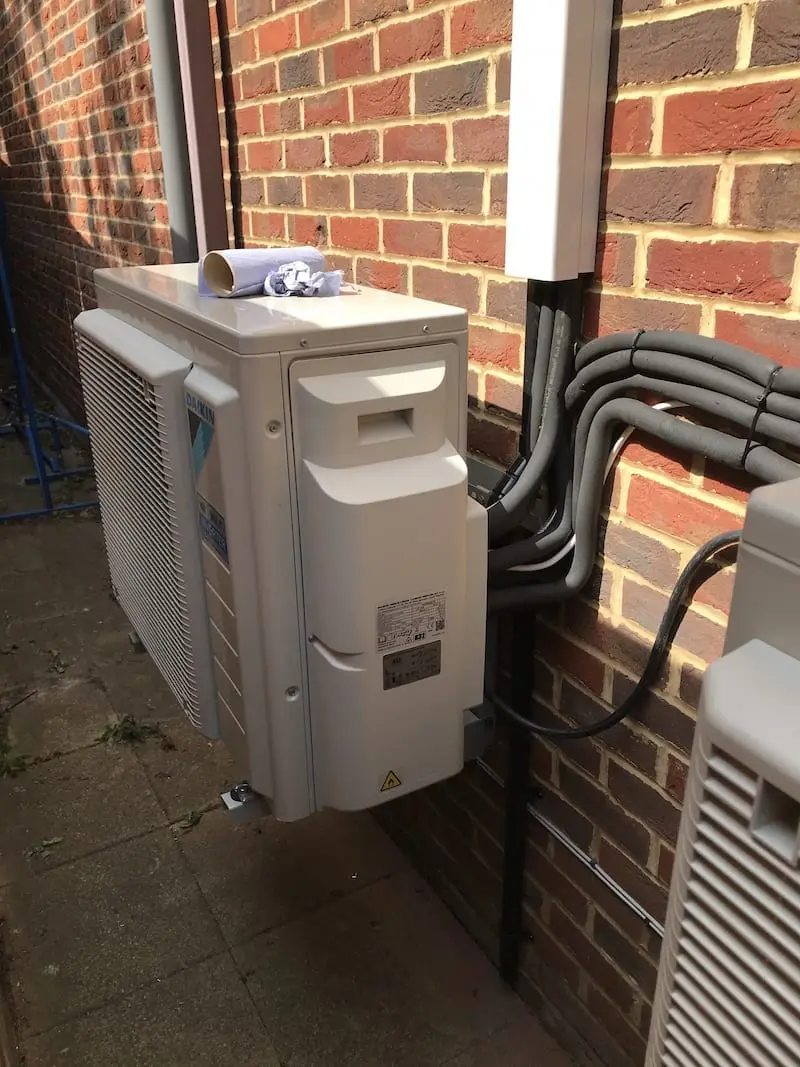
What matters now is whether the installation still complies with the current siting rules and the noise standard. The key location rules that still apply are: the unit cannot be installed on a pitched roof; if it is on a flat roof, it must be at least 1 metre from the external edge of that roof; in a Conservation Area or World Heritage Site it must not be on a wall or roof that fronts a highway or be nearer to a bounding highway than any part of the building; and elsewhere it must not be installed on a wall above ground-floor level if that wall fronts a highway.
Noise still matters. Planning Portal requires compliance with MCS 020, and the government says permitted-development installations must comply with a noise assessment methodology assessed at the nearest neighbouring habitable room window or door. The current MCS 020a document states a permitted-development noise limit of 37 dB LAeq,5mins, and defines the assessment position as 1 metre external to the centre point of a door or window to a habitable room of a neighbouring property. In practical terms, that means a unit close to a neighbour’s boundary is not automatically banned, but it does need to be checked properly because the noise calculation may be harder to satisfy.
WHEN YOU ARE MORE LIKELY TO NEED PLANNING PERMISSION OR OTHER CONSENT
When Extra Permission Is More Likely
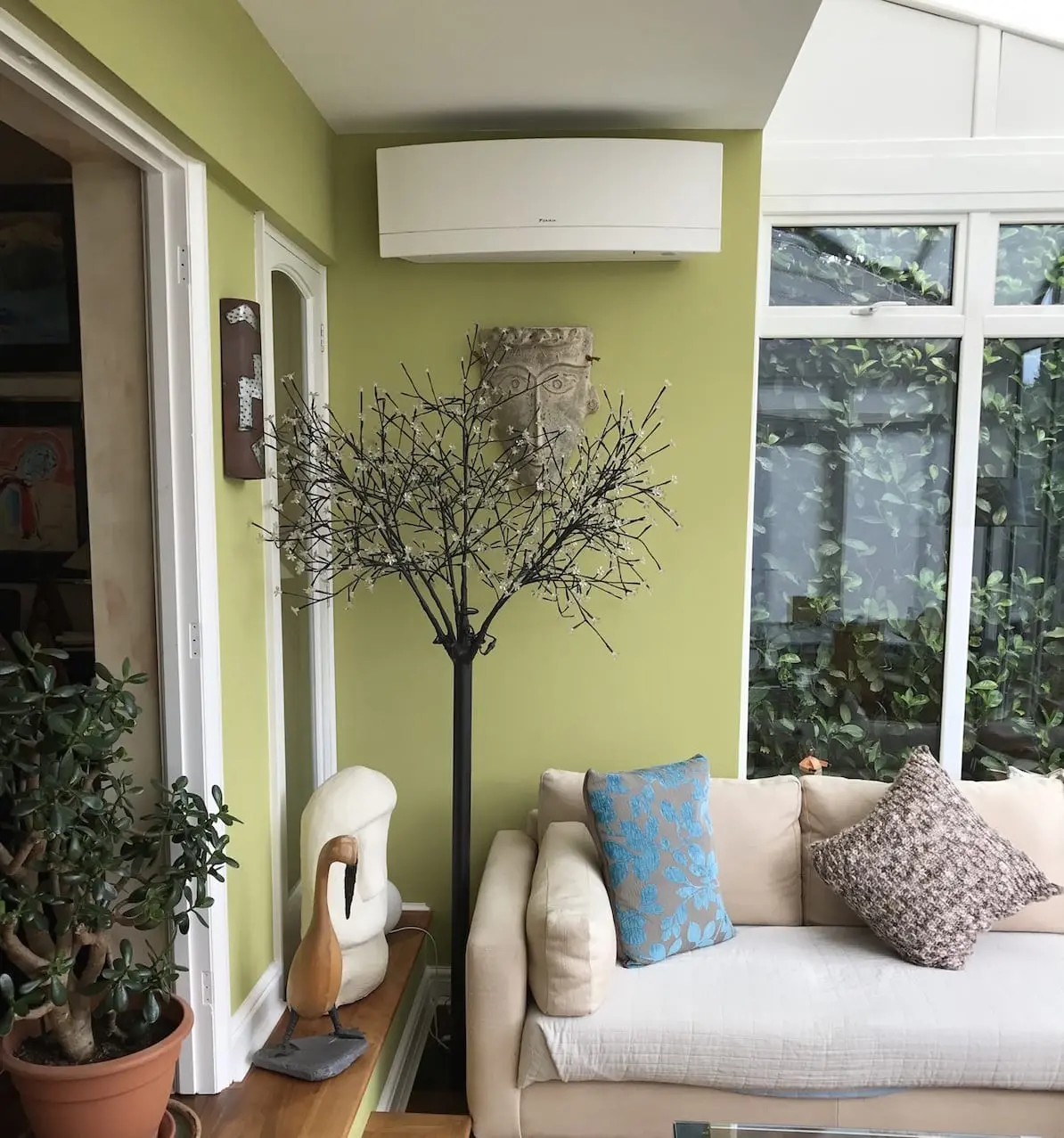
Planning permission or another form of consent is more likely to be needed if the property is a listed building, within the curtilage of a listed building, within a Scheduled Monument site, or if the proposed installation falls outside the permitted development limits and conditions. Planning Portal also says permitted development rights may be removed by a planning condition, an Article 4 Direction or another restriction.
Protected areas also need extra care. Planning Portal’s interactive air conditioning FAQ says that if your home is in a protected area such as a Conservation Area, permission will be required, while the detailed heat-pump page sets specific additional siting limits for Conservation Areas and World Heritage Sites. For that reason, protected-area properties are the kind of jobs where it is worth checking with the local authority before committing to a final unit position.
For commercial premises and other non-domestic land, the position is stricter. Planning Portal says air source heat pumps on non-domestic land are likely to require an application for planning permission.
IMPORTANT NOTE ON OWNER RESPONSIBILITY
Planning Responsibility and Owner Approval
We can advise on the practical side of an air conditioning installation, including likely unit positions, access, visual impact and whether an installation is likely to fall within the normal domestic rules. However, Planning Portal states that the owner of the property or land is ultimately responsible for complying with the relevant planning rules and building regulations, regardless of whether a formal application is needed. It also says failure to comply can leave the owner liable for remedial action.
If you instruct us to proceed without formal confirmation from the local planning authority, without obtaining any required consent, or without checking whether the work is lawful under permitted development rules, that planning and compliance risk sits solely with the owner of the premises. In practical terms, if there is any doubt, the safest approach is to check with the local planning authority before installation starts.
Planning permission is not the only thing to check. Planning Portal’s air conditioning FAQ says the installation must also comply with building regulations, and its responsibilities page says meeting the requirements of the building regulations is the responsibility of the person carrying out the work and, if they are not the same person, the owner of the building.
FAQ (Frequently Asked Questions)

Do I usually need planning permission for air conditioning at home?
Often no, provided the installation fully meets the current permitted development limits and conditions for domestic air source heat pumps in England.
Has the old 1 metre boundary rule changed?
Yes. The government confirmed that the 1 metre boundary rule was removed in England on 29 May 2025. There is no longer a general national requirement for a domestic outdoor unit to be 1 metre from the property boundary.
Is there still any 1 metre rule at all?
Yes. If the unit is installed on a flat roof, all parts of it must still be at least 1 metre from the external edge of that roof.
Can a system that cools as well as heats still fall under permitted development?
Yes. The 29 May 2025 changes allow air-to-air models that provide cooling as well as heating. What is still excluded under the domestic route is a unit used solely for cooling purposes.
How close can an outdoor unit be to a neighbour?
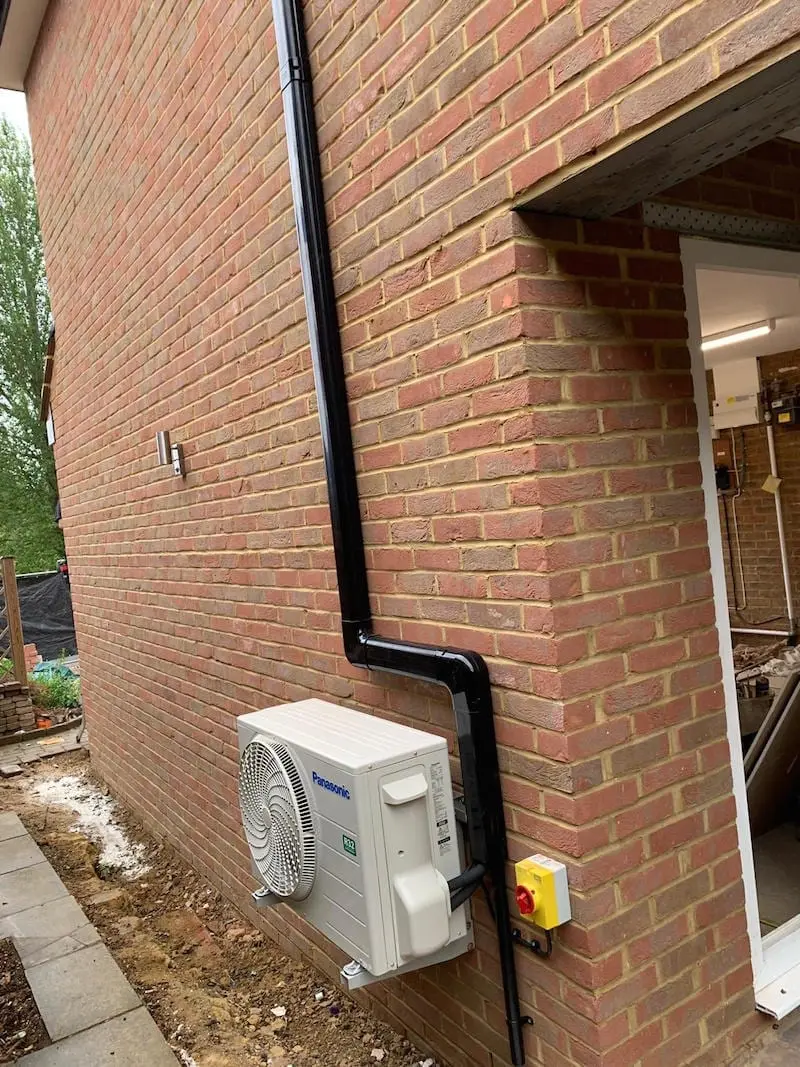
There is no longer a general boundary setback rule, but the unit still needs to comply with the current siting rules and the MCS 020 noise standard. Noise is assessed at neighbouring habitable-room windows and doors, so the closer the unit is to those positions, the more important the noise calculation becomes.
Who is responsible if the work goes ahead without the right consent?
Planning Portal says the owner of the property or land is ultimately responsible for complying with the relevant planning rules and building regulations, and may be liable for remedial action if the rules are not followed.